ERP for small manufacturers: custom, Tally add-on or off-the-shelf?
Meghna Pillai · ERP Solutions Architect8 min read
Most manufacturers we meet in Delhi NCR are not asking whether they need an ERP. They are asking which kind — and they have usually been burned once already by software their team refused to use.
The three real options
Tally with add-ons. Cheapest, familiar to your accountant, and fine for traders with simple stock. It struggles with production planning, job cards and multi-plant inventory.
Off-the-shelf ERP (Odoo, Zoho, SAP Business One and similar). Fast to start, well tested, and sensible when your process is close to the industry standard. Per-user licences and customisation costs add up as you grow.
Custom ERP. Built around how your business actually runs. Higher initial cost, no per-user fees, and you own the code. Makes sense when your process is your advantage or when packaged tools keep being worked around.
Five questions that decide it
1. How many people will use it daily?
With 10 users, licence fees are minor. With 150 — including floor supervisors, store keepers and field sales — they can exceed the cost of a custom build within a few years.
2. How standard is your production process?
If you make products to stock in a straight line, packaged ERPs fit well. If every order is configured, involves job work, or moves between plants, expect heavy customisation either way.
3. Will your accountant give up Tally?
Usually not, and they should not have to. A good ERP syncs sales, purchases, receipts and payments to Tally automatically so statutory accounting stays where it is.
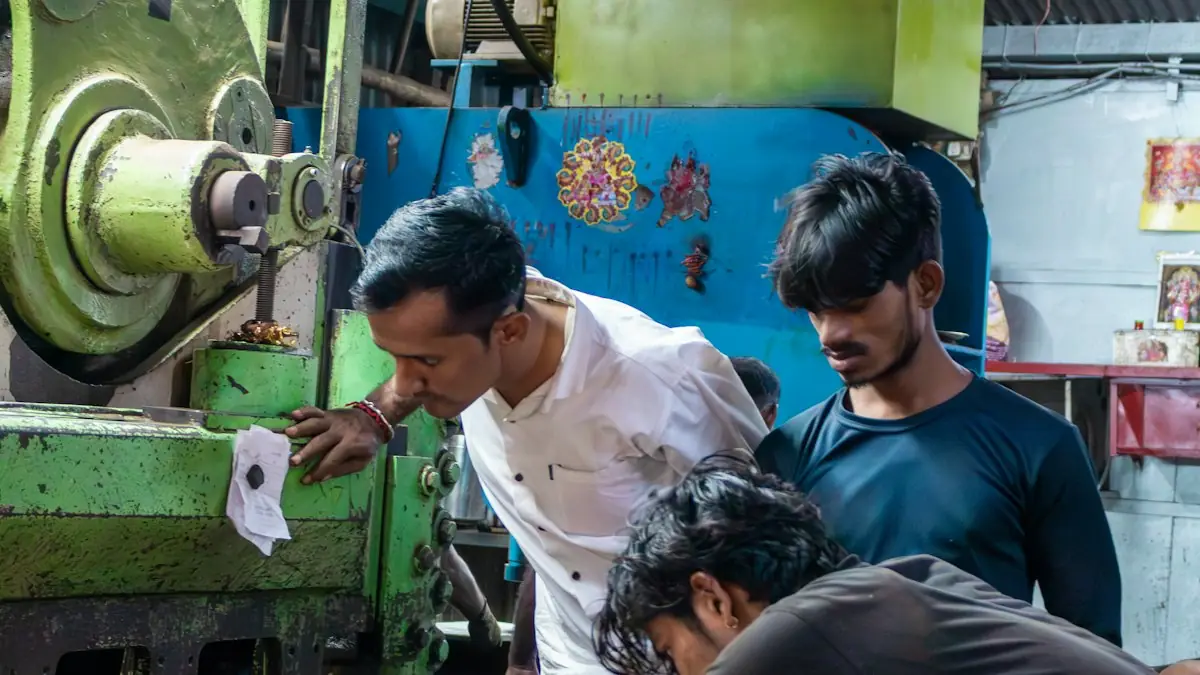
4. Who will use it on the shop floor?
Screens designed for an accounts office fail on a factory floor. Large buttons, tablet job cards, barcode scanning and Hindi labels matter more than features on a brochure.
5. Can you start small?
The ERP projects that succeed go live in phases. Inventory and sales first, production next, HR and payroll after. Your team gets comfortable with the system before it runs everything.
Red flags in any ERP proposal
No time budgeted to visit your shop floor before quoting
A single "big bang" go-live date for every module
Data migration described in one line
No mention of training for the people who will actually use it
Our honest default
For traders and distributors with fewer than 20 users, an off-the-shelf product is often the right first step, and we will say so. For manufacturers with production, multiple locations and a large team, a phased custom ERP with Tally integration usually pays for itself within two years — mostly in hours saved at month-end and stock that finally matches reality.
Meghna Pillai
ERP Solutions Architect at Corewebbers, New Delhi.
Maps manufacturing and distribution processes into ERP systems people actually use.
Most chatbot projects fail for boring reasons: the wrong use case, no guardrails on pricing, and nobody reading the transcripts. What we have learned launching AI assistants on WhatsApp for clinics, coaching institutes and D2C brands.
UPI, COD, GST invoices, Shiprocket and sale-day traffic change the answer for Indian brands. How we pick a platform for D2C and B2B stores, with real costs and trade-offs.
Google keeps adjusting the thresholds and most advice online is a year out of date. Here is what we measure on every build, the three fixes that give the biggest wins, and the ones that waste a developer week.